What Is an FD30 Fire Rated Steel Door? Complete UK Buyer’s Guide (2026)
Fire safety requirements in the UK rarely feel complicated—until a project reaches the door schedule. Suddenly, terms like FD30, self-closing devices, intumescent seals, and certification bodies appear in specifications, tenders, and building control comments. Getting one detail wrong can delay handover, trigger costly replacements, or undermine the fire strategy.
This guide explains what an FD30 fire rated steel door is, where it is used in the UK, how certification works, and how to buy the right door set in 2026. Practical guidance is included for architects, contractors, developers, and homeowners specifying or purchasing steel doors for apartments, commercial spaces, and mixed-use schemes. Portamet’s role as a manufacturer of bespoke steel doors and windows is also relevant here: slim-profile steel systems can be designed to meet performance targets while supporting modern, light-filled architecture.
What Does FD30 Mean?
FD30 indicates a fire door assembly designed to resist fire for 30 minutes when tested to the relevant standard and installed as a complete doorset. In UK usage, “FD” refers to “Fire Door” and the number refers to the duration of fire resistance in minutes.
FD30 is one of the most commonly specified ratings in the UK, particularly for internal compartmentation in residential and many commercial buildings. It is often used for protected routes such as corridors and stair enclosures, and for separating higher-risk rooms from escape routes.
FD30 vs FD30S
FD30S is a 30-minute fire-resisting door that also provides smoke control, typically achieved via cold smoke seals (often combined with intumescent strips). In UK projects, smoke control is frequently as important as fire resistance, because smoke inhalation is a major risk during evacuation.
FD30: 30 minutes fire resistance.
FD30S: 30 minutes fire resistance plus smoke control (the “S”).
FD30 Is Not Just the Leaf
A key buying principle: FD30 performance applies to the tested doorset/assembly, not merely the door leaf. A compliant FD30 steel door solution depends on the complete combination of:
Door leaf
Frame
Hinges and hardware
Seals (intumescent and often smoke)
Glazing system (if vision panels are included)
Ironmongery prep, apertures, and reinforcements
Installation method, fixings, and tolerances
Why Choose Steel for an FD30 Fire Door?
Steel fire doors are widely used in UK commercial and industrial settings and are increasingly specified in premium residential and design-led projects where durability and crisp sightlines matter. Steel performs well under demanding conditions and can deliver long-term stability when correctly engineered.
Key Advantages of FD30 Steel Doors
Strength and durability: Suited to high-traffic areas and intensive use.
Dimensional stability: Reduced warping and twisting compared with some timber options when exposed to humidity or heavy use.
Security potential: Steel construction can integrate robust locking and reinforcement strategies.
Design flexibility: Modern steel doors can be tailored in layout, glazing, and finish; slim-frame aesthetics may suit contemporary interiors.
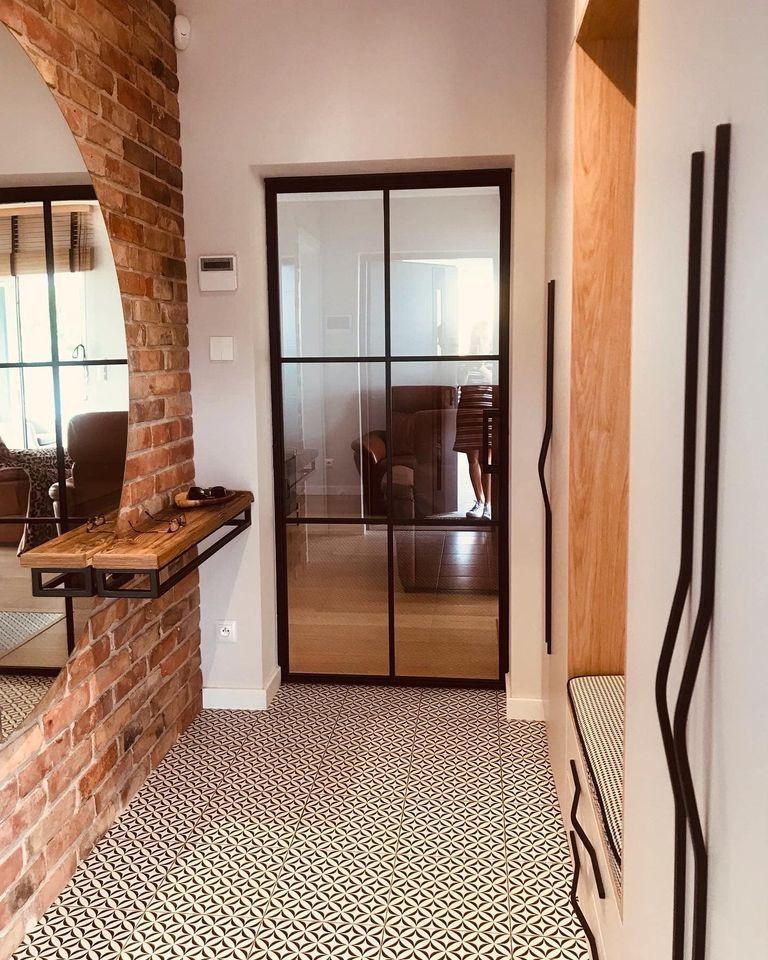
For projects seeking minimalist “Crittall-style” proportions, the interaction between fire performance and sightlines becomes important. Bespoke steel frames can be detailed to balance glazing layout, structural reinforcement, and compliant fire-rated components, especially when a manufacturer is involved early in the design process.
UK Regulations and Guidance for FD30 Doors (2026)
FD30 door requirements typically derive from Building Regulations and supporting guidance, plus any project-specific fire strategy. In England, Approved Document B (ADB) is commonly referenced; Scotland, Wales, and Northern Ireland have their own technical handbooks and guidance. For many projects, a fire engineer will define the required ratings and door functions.
Where FD30 Is Commonly Required
Exact requirements vary by building type and layout, but FD30 or FD30S doors are commonly specified for:
Doors opening onto protected corridors and stairways
Flat entrance doors (depending on building type and current guidance)
Service cupboards and risers (depending on risk and fire strategy)
Plant rooms and ancillary spaces (sometimes higher ratings are required)
Internal compartment lines where 30 minutes is adequate
Higher ratings (FD60 and above) may be required for plant rooms, high-risk areas, or specific compartmentation strategies. A door schedule should never assume FD30 by default.
The Importance of the Fire Strategy
A buyer’s guide is useful, but the fire strategy is decisive. Fire doors are part of a system that includes compartment walls, floors, ventilation dampers, and escape route design. The door rating, smoke control requirement, and hardware configuration should match the strategy, not personal preference.
Standards and Testing: How FD30 Fire Rated Steel Doors Are Proven
In the UK, fire doors are typically tested to British or European standards and supplied with evidence of performance in the form of test reports, assessment reports, and third-party certification.
Common Fire Test Standards
BS 476-22: Fire resistance testing (traditional UK standard used historically and still referenced in some contexts).
BS EN 1634-1: Fire resistance and smoke control tests for doors, shutters, and openable windows.
BS EN 1634-3: Smoke control testing for door assemblies.
Many projects will accept either route where appropriately evidenced and certified. The critical factor is that the supplied doorset matches the tested or assessed configuration, including hardware, glazing, and installation method.
Tested, Assessed, and Certified: What Each Means
Tested: A specific configuration was physically tested in a furnace to measure integrity and insulation performance (as applicable).
Assessed / Extended application: An expert assessment extends test evidence to similar configurations (for example, size variations or hardware changes), within defined limits.
Third-party certified: Ongoing independent oversight of manufacturing and product conformity; often the most reassuring route for buyers and building control.
For buyers, the safest approach is to request third-party certification and confirm that the exact door configuration is covered, including leaf thickness, frame type, seals, glazing, and ironmongery.
What “Integrity” Means in a Fire Door Context
Fire door performance generally focuses on preventing the passage of flame and hot gases (integrity) for the rated duration. Some assemblies also aim to limit temperature rise on the unexposed face (insulation), though insulation requirements may not apply to many internal doorsets in typical UK specifications. A fire engineer’s specification should clarify the required classification.
FD30 Steel Door Construction: What Typically Sits Inside
Steel fire doors are engineered systems. While designs vary between manufacturers, typical components include:
Steel skins or profiles: Providing the structural shell and impact resistance.
Fire-resistant core: Often mineral-based or engineered boards designed to withstand high temperatures.
Reinforcements: Around hinges, closers, locks, and pull handles to maintain performance under stress.
Intumescent seals: Materials that expand under heat to seal gaps and slow fire spread.
Smoke seals: Brush or blade seals (for FD30S) to reduce cold smoke leakage.
In slim-frame glazing and “Crittall-style” steel doors, construction becomes more nuanced: sightlines, transoms, mullions, and glazing beads must all be compatible with the fire-rated system. Early coordination with a specialist manufacturer of bespoke steel doors and windows helps avoid late-stage compromises to proportions or performance.
Frames Matter: Steel Frame vs Other Frame Types
For steel fire doors, frames are commonly steel too, forming a coherent assembly with predictable tolerances and durability. The interface between frame and wall is a frequent weak point in real-world fire performance if installed incorrectly.
Key Frame Considerations
Wall type: Masonry, concrete, metal stud, or timber stud; each affects fixings and fire stopping.
Anchorage and fixings: Must follow the tested/certified method and spacing.
Gaps and packing: Excessive gaps can invalidate performance; the gap must be filled with approved fire-rated materials.
Threshold details: A frequent source of non-compliance, especially where accessibility requirements and smoke control intersect.
Glazing in an FD30 Steel Door: Is It Possible?
Yes—FD30 steel doors can include vision panels or larger glazed areas, but only when the glazing system is fire-rated and covered by test evidence or assessment. Not all “toughened glass” is fire-rated, and standard architectural glass is not suitable for fire doors.
Types of Fire-Rated Glass (Simplified)
Fire-resisting integrity glass: Designed to prevent flames and hot gases passing through for the rated period.
Fire-resisting integrity + insulation glass: Also limits heat transfer; often thicker and may affect sightlines and weight.
The choice depends on the required classification and location. Aesthetic goals (clear glass, minimal beads) must be reconciled with tested systems and bead details. In slim-frame glazing projects, bespoke steel frames can be configured around certified fire-rated glazing systems to maintain a refined look without undermining compliance.
Ironmongery for FD30 Steel Doors: What Must Be Controlled
Hardware is not an afterthought. Changing hinges or a closer model can invalidate a door’s certification if it is not within the scope of evidence. For UK buyers, the priority is to confirm that every item is approved for the doorset.
Essential Components
Hinges: Typically fire-rated hinges with appropriate bearings and fixings; quantity depends on door size/weight.
Door closer: Often required for fire doors to ensure latching; must be sized to the door and approved for the assembly.
Lock and latch: Many fire doors require a latch to engage reliably; panic hardware may be required for escape routes.
Seals: Intumescent strips and, for FD30S, smoke seals.
Signage: “Fire door keep shut” or “keep locked” where required.
Common Optional Components (Still Must Be Approved)
Electromagnetic hold-open devices (must release on alarm)
Access control, electric strikes, and maglocks (must be compatible with the escape strategy)
Door selectors for pairs
Kick plates, push plates, pull handles
Drop-down seals (especially for smoke control and thresholds)
Self-Closing and Latching: Core Principles for UK Compliance
A fire door that is routinely left open is unlikely to perform its function in a real event. Most fire strategies rely on doors being closed at the time of fire, which is why closers and hold-open devices are central to compliance.
Self-closing: Typically required on fire doors protecting escape routes.
Hold-open: Acceptable in many cases only with devices that automatically release on fire alarm activation.
Latching: Often required to ensure the door closes into the frame and seals engage properly.
For steel doors with slim profiles, ensuring reliable latching and consistent seal compression requires careful manufacturing tolerances and appropriate hardware selection.
FD30 Steel Door Sizes, Tolerances, and Gaps
One of the most practical purchasing topics is sizing. Fire doors must operate smoothly while maintaining controlled clearances. Excessive gaps can allow smoke and hot gases to pass early.
What to Check in Schedules and Site Openings
Structural opening sizes: Must match the frame design and allow for approved fixing and fire stopping.
Door handing: Left-hand/right-hand opening, and whether the door opens toward escape direction where required.
Clearances: Confirm permitted perimeter gaps and threshold details as per certification.
Deflection and movement: In new builds, anticipate slab deflection and tolerance build-up in corridors.
Bespoke manufacturing supports accurate sizing for non-standard openings—common in refurbishments—while maintaining the tested configuration limits defined by certification.
FD30 Steel Door Finishes for UK Projects
Steel doors can be finished for both performance and aesthetics. Finish selection should consider the environment (interior corridor vs exposed external position) and the cleaning regime.
Common Finish Options
Powder coating: Widely used for interior applications; broad colour availability and durable finish.
Wet paint systems: Useful for specific performance requirements or touch-up strategies.
Galvanising or enhanced corrosion protection: Important where moisture or external exposure is expected.
Where a “Crittall-style” design intent exists, a refined powder-coated finish with consistent sheen can be crucial to the final look—especially in open-plan interiors where steel doors and steel-framed glazing become architectural focal points.
Internal vs External FD30 Steel Doors: A Critical Distinction
Many UK buyers assume FD30 automatically means suitable for external use. Fire rating and weather performance are separate issues. An external door may need additional performance characteristics, such as:
Weather tightness and air permeability considerations
Thermal performance targets to support energy efficiency
Corrosion resistance for coastal or exposed sites
Robust threshold drainage and detailing
Portamet’s experience as a manufacturer of bespoke steel doors and windows is particularly relevant when projects aim for slim-frame glazing with improved thermal performance, especially in design-led builds where steel aesthetics are desired without sacrificing comfort.
Thermal Performance and Fire Doors: How They Interact
In the UK market, thermal performance is often discussed in the context of external doors and glazed screens. Fire doors are frequently internal, but mixed-use and high-end residential designs sometimes use steel doors as part of larger glazed partitions and entrance compositions, where comfort, condensation risk, and energy use matter.
Practical Considerations
Thermal breaks: Often used in external steel systems to reduce heat transfer; suitability depends on the door’s purpose and certification.
Glazing specification: Fire-rated glazing has different thicknesses and performance than standard double glazing; this can affect thermal values.
Condensation risk: Slim steel frames can be cold bridges if not designed for the environment; detailing and system choice matter.
For projects requiring both premium aesthetics and performance, coordination between the fire strategy, envelope strategy, and steel system design is essential.
FD30 vs FD60: How to Choose the Right Rating
FD30 is common, but not universal. FD60 (60 minutes) is often specified where higher risk is present or where the building’s compartmentation strategy demands it.
Typical Reasons to Upgrade to FD60
Plant rooms or high fire-load spaces
Critical compartment walls
Specific requirements in taller or more complex buildings
Fire engineer’s performance-based strategy
Upgrading the rating can affect door thickness, weight, hardware needs, and sometimes sightlines—important when slim-frame steel doors are part of the design intent.
How to Buy an FD30 Fire Rated Steel Door in the UK (2026 Checklist)
The most effective way to buy an FD30 steel door is to treat it as a certified doorset and to control substitutions. The following checklist supports smoother approvals and fewer defects at handover.
1) Confirm the Required Performance in Writing
FD30 or FD30S?
Any acoustic rating required?
Security requirements (e.g., for plant rooms or sensitive areas)?
Escape hardware requirements (panic bars, access control, fail-safe behaviour)?
Any glazing requirement and minimum vision panel size?
2) Request Evidence: Certification and Scope
Third