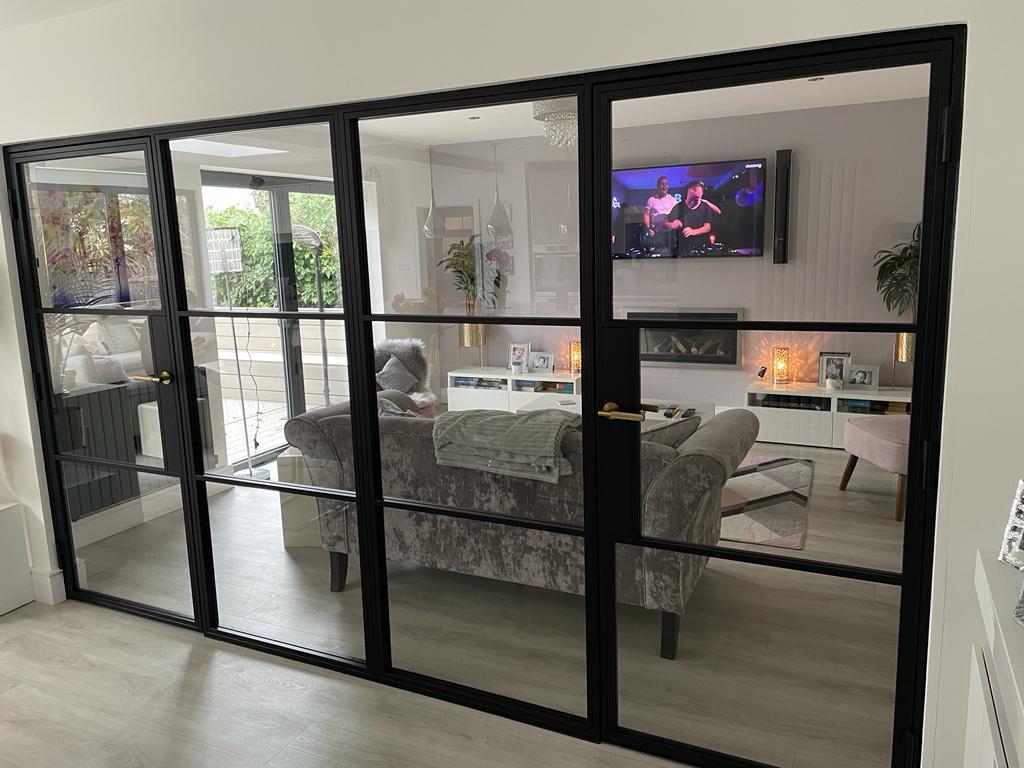
W40 FD60 Fire-Rated Steel Doors in the Making: How 60-Minute Protection Meets Slim-Frame Design
Fire safety rarely features on a moodboard—until it needs to. In many residential and commercial projects, the goal is to create open, light-filled interiors with elegant sightlines, while also meeting strict building regulations and insurance requirements. That is where FD60 fire-rated steel doors become a decisive design tool rather than a compromise.
W40 FD60 fire-rated steel doors combine a refined, slim-frame aesthetic with tested fire performance. The result is a door that can help protect escape routes and compartmentalise risk, while still supporting modern architecture, Crittall-style detailing, and high-end interior design.
As a premium Polish manufacturer based in Gdańsk, Portamet produces bespoke steel doors and windows—crafted to order, engineered for durability, and delivered to projects across Europe, the UK, and the USA. Fire-rated steel doors are part of that broader expertise: precision fabrication, careful specification, and a deep respect for how a door must perform in real buildings, not just in catalogues.
What “FD60” Means for Fire-Rated Steel Doors
FD60 typically refers to a fire door assembly designed to provide up to 60 minutes of fire resistance under test conditions. In practical terms, the door’s job is to slow the spread of fire and smoke long enough to support safe evacuation and to reduce damage by containing fire to a specific area.
FD60 fire-rated steel doors often appear in locations where higher performance is required—such as protected corridors, stairwells, plant rooms, riser cupboards, or between higher-risk spaces and primary circulation areas. In some projects, FD60 is not simply a preference; it is a requirement driven by building type, occupancy, and the fire strategy.
However, performance is never just a number. Fire rating depends on the complete door set: the frame, leaf construction, glazing (if present), seals, ironmongery, and installation details. The strongest-looking steel door can fail its purpose if any component in the assembly is incorrect or substituted.
W40: Slim Steel Profiles Without a Heavy Visual Footprint
W40 is frequently associated with slim-frame glazing aesthetics—fine lines, crisp geometry, and a minimalist grid that feels architectural rather than decorative. The appeal is straightforward: steel frames can be made slender while staying rigid, allowing more glass, more daylight, and more visual continuity between spaces.
In interiors, this look is often described as Crittall-style, though contemporary steel systems can offer much broader flexibility in dimensions, configurations, and performance. In exteriors, slim-frame glazing can elevate a façade by keeping the focus on proportions, materials, and light rather than bulky frame widths.
Bringing fire rating into a W40-style door is where engineering becomes just as important as design. Maintaining slim sightlines while achieving FD60 performance requires disciplined construction choices and strict adherence to tested details.
Why Fire-Rated Steel Doors Matter Beyond Compliance
Fire-rated doors are often treated as a compliance line item. In well-designed buildings, they become a core part of a layered safety approach that protects people, property, and continuity of use. For developers and property owners, that can mean fewer vulnerabilities in the building’s risk profile. For architects and designers, it means freedom to plan with confidence—knowing that safety and aesthetics can coexist.
Steel is particularly well suited to demanding door applications because it combines structural strength with dimensional stability. When engineered correctly as part of a certified fire-rated assembly, a steel door can offer long-term robustness in high-traffic environments while still delivering a refined, design-led finish.
Inside the Making of a W40 FD60 Fire-Rated Steel Door
“In the making” is not just a production story; it is a sequence of decisions that must align. A W40 FD60 fire-rated steel door relies on accuracy in design, manufacturing discipline, and careful specification of every component in the door set.
1) Specification Starts with the Fire Strategy
The first step is understanding what the door must do in the building. FD60 may be required for compartmentation, protected routes, or areas with higher fire loads. The door’s swing direction, location, frequency of use, and access control needs all influence the specification.
In many projects, fire doors are also expected to deliver acoustic separation, privacy, security, and a premium look. The goal is to avoid treating these needs as competing demands. Instead, the door set is designed so performance and appearance reinforce each other.
2) Engineering the Steel Frame and Leaf
A fire-rated steel door set is not a standard internal steel partition door with a different label. The frame and leaf must be engineered to work with the chosen fire-rated core materials, seals, and glazing system (if applicable). Tolerances matter: clearances around the leaf, hinge positions, and the interface between the frame and surrounding construction all affect performance.
Steel fabrication quality plays a central role here. Clean welds, accurate corner geometry, and consistent profile alignment are essential not only for aesthetics, but also for ensuring the assembly matches the tested configuration. Slim-frame glazing thrives on precision—any misalignment becomes visible immediately.
3) Fire-Rated Glazing: Where Design Meets Proof
Many W40-style doors include glass, and glass is often the point that raises the most questions in FD60 specifications. Fire-rated glazing is not ordinary toughened glass; it is a specialist product with defined performance, thickness, and installation requirements.
In a fire-rated steel door, the glazing system is as important as the glass itself. Beads, gaskets, liners, and fixing methods must align with tested details. The same applies to the size and layout of glazing panes. Slim sightlines can still be achieved, but the design must stay within the parameters of proven fire performance.
When the goal is a bright interior with transparent compartmentation, fire-rated glazed steel doors can be transformative. They support openness and daylight while still contributing to a robust fire strategy.
4) Seals and Intumescent Details: Small Components, Big Consequences
Intumescent seals expand when exposed to heat, helping to limit the passage of flames and hot gases. Smoke seals may also be required depending on the door’s location and the building’s strategy. These components are often visually discreet, but their correct specification and placement is non-negotiable in a fire-rated door assembly.
Because the W40 aesthetic values clean lines, seals must be integrated thoughtfully so the door remains crisp and minimalist. The best outcomes come from planning these details early rather than trying to conceal them as an afterthought.
5) Hardware and Ironmongery: Tested, Compatible, and Appropriate for Use
Fire-rated doors depend on compatible hardware—hinges, closers, locks, latches, and handles that suit the door’s rating and intended use. A door on a high-traffic route may need heavy-duty hardware that can withstand repeated cycles without drifting out of adjustment.
From a design perspective, ironmongery also shapes the experience of the door: the feel of the handle, the speed of the closer, and the sound of the latch all contribute to perceived quality. In premium residential projects, minimal hardware is often preferred. In commercial spaces, reliability and access control integration may take priority. Either way, fire-rated requirements must remain central.
6) Surface Preparation and Finishing
Steel doors and windows are often chosen because they look elegant and stay looking that way. Achieving a flawless finish requires careful surface preparation and a coating process that suits the project environment—whether that means a subtle matte black for an industrial interior, a warm neutral tone for a contemporary home, or a colour-matched finish that blends into a minimal palette.
Finishing is more than colour. It is also texture, durability, and how the steel interacts with light. Slim-frame glazing can look sharp in daylight and refined under warm interior lighting—when the coating is consistent and professionally applied.
Design Options for FD60 Steel Doors: What Can Be Bespoke
One of the biggest misconceptions about fire-rated doors is that they must look generic. With a bespoke steel manufacturer, many elements can be tailored while keeping the door aligned with tested performance requirements.
Single and Double Leaf Configurations
Both single and double doors can be used to suit circulation patterns and opening widths. Double doors can support generous transitions between spaces—useful in hospitality, office interiors, and high-end residential layouts that prioritise flow.
Fixed Side Panels and Overlights
Where additional light is needed, fixed glazed panels can be paired with a door to create a wider glazed screen effect. This is a common approach in Crittall-style interiors: a steel-framed door with adjoining glass that creates a full-height partition without closing off the space visually.
Grid Patterns and Sightlines
The internal bar layout is often central to the aesthetic. Some interiors call for a simple, large-pane look; others use a more articulated grid for rhythm and proportion. Slim steel profiles help keep these patterns elegant rather than heavy.
Thresholds and Accessibility
Threshold design affects accessibility and comfort. In many projects, a low threshold is preferred to support step-free movement and a clean visual transition. Requirements vary by building type and location, so threshold details should be coordinated with both access needs and performance expectations.
Steel Doors vs Aluminium for Fire-Rated, Slim-Frame Applications
Aluminium is often used for many glazing applications due to its corrosion resistance and versatile systems. Steel, however, holds a distinct advantage when the design brief demands very slim sightlines with a strong architectural presence and high rigidity.
In fire-rated applications, the decision should be guided by certified performance, the desired visual outcome, and the overall building strategy. Steel-framed fire-rated doors are particularly attractive when the project calls for a refined, minimalist frame that still feels robust and premium.
For architects and designers seeking Crittall-style lines with a more engineered, durable feel, bespoke steel frames can offer a compelling solution—especially when manufactured to order for the exact opening sizes and layout.
Thermal Considerations: Fire Rating and Energy Performance
Fire rating and thermal performance address different risks, but both are increasingly central to modern specification. In external doors and windows, thermal efficiency is essential for comfort, condensation control, and energy use. In internal doors, thermal performance may be less critical, but comfort and environmental separation can still matter—particularly in mixed-use spaces or transitions to unheated zones.
Portamet is known for steel-framed systems that balance industrial aesthetics with strong performance. Slim-frame glazing does not need to mean poor insulation when systems are designed with thermal efficiency in mind. Where relevant, steel doors and steel windows can be configured to support modern expectations of comfort and energy performance alongside architectural elegance.
Quality Control: Why Precision Manufacturing Matters in Fire-Rated Steel Doors
FD60 steel doors depend on disciplined quality control. Consistent manufacturing is not only about achieving a clean finish; it is about ensuring repeatable alignment with approved details. In slim-frame glazing, small deviations can create visible unevenness and functional problems such as binding, latch misalignment, or inconsistent gaps.
In a fire-rated context, those details take on added importance. The door’s performance is tied to the integrity of the assembly. That is why bespoke manufacturing—where each door is made to the project’s dimensions and coordinated with the specification—can reduce site issues and improve the final outcome.
Common Mistakes to Avoid When Specifying FD60 Steel Doors
Assuming the Rating Applies to the Door Leaf Alone
Fire performance is determined by the complete door set. Substituting hardware, changing glazing details, or altering clearances can undermine the intended rating. The safest approach is to specify complete, compatible components as part of an integrated assembly.
Leaving Fire Door Decisions Too Late
Fire-rated doors intersect with structure, finishes, and services. Late changes can cause compromises: awkward thresholds, misaligned grids, or unnecessary frame build-ups that thicken sightlines. Early coordination supports both compliance and aesthetics.
Overlooking Real-World Use
A door on a primary circulation route will be used differently from a door to a plant room. Usage affects hardware selection, closer strength, and maintenance needs. The best-looking steel door is the one that still operates perfectly after years of daily use.
Not Coordinating Surrounding Construction
Installation conditions matter. The surrounding wall type, structural opening tolerances, and finishing layers all influence how the door fits and performs. Accurate site measurements and coordinated detailing help avoid on-site improvisation.
Where W40 FD60 Fire-Rated Steel Doors Fit Best
FD60 slim-frame steel doors are particularly relevant where design intent and risk management overlap. Typical applications include:
- Stair cores and protected routes where fire compartmentation is essential
- Apartment building corridors requiring robust, long-life door performance
- Hotels and hospitality projects balancing safety, aesthetics, and guest experience
- Offices seeking transparent compartmentation and acoustic zoning
- High-end residential interiors where steel-framed partitions define space without sacrificing light
- Renovations of period buildings where new fire strategy upgrades must sit comfortably within an architectural narrative
In many of these contexts, Crittall-style steel doors are chosen for their visual clarity and timelessness. A fire-rated version extends that design language into areas where performance cannot be negotiable.
European Craftsmanship, International Delivery: What to Expect from Portamet
Portamet manufactures bespoke steel doors and windows in Gdańsk, Poland, combining European craftsmanship with modern fabrication standards. Each project is treated as a tailored scope: made-to-measure openings, coordinated configurations, and careful attention to the slim-profile details that define premium steel-framed glazing.
International clients often look for a partner that can support ambitious design with reliable production and logistics. Portamet produces steel doors and steel windows for clients across Europe, the UK, and the USA, bringing a consistent approach to quality, detailing, and project coordination across different markets.
Whether the project calls for a W40 FD60 fire-rated steel door, a suite of slim-frame glazing partitions, or a complete set of bespoke steel windows, the same fundamentals apply: precision, durability, and a design-first mindset grounded in performance.
How to Plan a Smooth Project with Fire-Rated Slim-Frame Steel Doors
Share Key Information Early
Door schedules, intended locations, swing directions, and any access control requirements help determine the right configuration. If glazing patterns or grid layouts are important, sharing references early helps align performance needs with visual intent.
Confirm Dimensions and Interfaces
Steel-framed doors reward accurate openings and clear interface details. Confirming structural openings, finished floor levels, and wall build-ups reduces risk and improves installation quality.
Coordinate Finishes and Hardware
Colour choices, sheen level, and handle style strongly influence the final look. Coordinating these elements alongside the fire-rated requirements creates a door that feels intentional rather than purely functional.
A Final Word: Fire Safety Can Be Beautiful, Too
FD60 fire-rated steel doors no longer need to signal compromise. With a slim-frame W40-style approach, it becomes possible to protect key parts of a building while keeping interiors light, modern, and architecturally coherent. The right fire-rated steel door supports the way a space looks, feels, and performs—day after day.
Portamet designs and manufactures bespoke steel doors and windows with slim sightlines, robust engineering, and an emphasis on long-term quality—supplying projects throughout Europe, the UK, and the USA. For projects considering W40 FD60 fire-rated steel doors, exploring options early can help align fire strategy, design intent, and buildability.
Enquiries and specifications can be shared to receive guidance, configuration options, and a tailored quotation for bespoke fire-rated steel doors and slim-frame glazing.