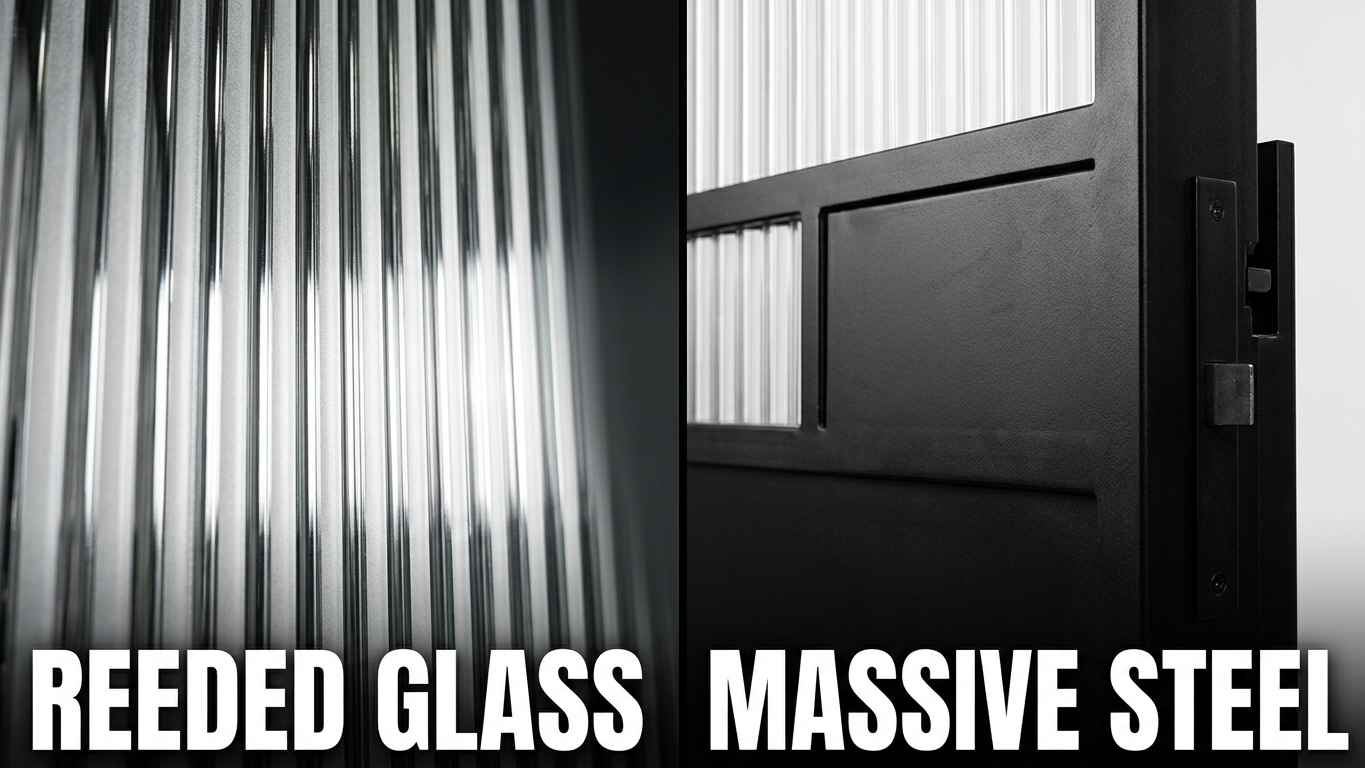
Reeded Glass and Massive Lock Boxes: Beautiful Bespoke Steel Doors by Portamet
Searching for a door that delivers privacy, security, and architectural character without sacrificing daylight? Reeded glass paired with a substantial lock box has become a standout combination in contemporary projects, especially where slim-frame steel doors and steel windows define the interior or façade.
Across apartments, townhouses, loft conversions, hospitality spaces, and high-end commercial fit-outs, reeded glazing brings texture and softness, while a “massive” lock box signals strength and reliability. Portamet, a premium Polish manufacturer based in Gdańsk, produces bespoke steel doors and windows with slim steel profiles, robust hardware integration, and strong thermal performance for clients across Europe, the UK, and the USA.
What Reeded Glass Adds to Steel-Framed Design
Reeded glass (also called fluted glass) features linear ridges that refract and diffuse light. The effect feels both classic and current: early 20th-century references with a modern edge. In steel-framed glazing, the result often resembles refined Crittall-style aesthetics, updated for present-day interiors and performance expectations.
Daylight Without Full Exposure
Many interiors need borrowed light while limiting direct sightlines. Reeded glass solves that design brief elegantly. Corridors, stairwells, bathrooms, home offices, and dressing rooms gain illumination and depth while maintaining separation and discretion.
Texture, Rhythm, and a Softer Industrial Look
Steel doors and steel windows naturally introduce crisp geometry. Reeded glazing adds a tactile layer, breaking up reflections and reducing harsh contrast. The vertical lines create rhythm, complementing both minimalist schemes and more decorative interiors.
A Strong Match for Slim-Frame Glazing
Fluted patterns read best when framed by thin, precise lines. Slim steel profiles highlight the geometry and keep the focus on proportion, grid layout, and material quality. Bespoke steel frames allow careful control over bar spacing, sightlines, and panel balance, ensuring reeded glass looks intentional rather than decorative filler.
Reeded Glass Options: Choosing the Right Specification
Not all reeded glass performs the same. Pattern depth, ridge spacing, and glass build-up influence privacy, clarity, cleaning, and overall atmosphere. Project planning benefits from aligning glass selection with usage, door type, and adjacent lighting.
Pattern Depth and Visual Privacy
Deeper flutes generally increase diffusion, reducing recognisable outlines behind the panel. Shallower patterns provide a subtler effect and slightly clearer silhouettes. Pattern direction matters as well: vertical reeding elongates spaces and pairs naturally with tall steel door proportions; horizontal reeding can widen perceived space but requires careful alignment across multiple panels.
Single Glazing vs Insulated Glass Units (IGUs)
Internal partitions often use single glazing for a lighter build. External steel doors and steel windows typically require insulated glass units for thermal efficiency. Reeded glass can be integrated into an IGU as one pane of the build-up, supporting energy performance while maintaining the fluted aesthetic.
Safety: Tempered and Laminated Reeded Glass
Door glazing generally benefits from safety glass. Tempered glass improves impact resistance; laminated glass improves post-breakage safety and can add acoustic and security benefits. In higher-risk locations or premium specifications, laminated reeded glass can be selected to improve safety, reduce the chance of shards, and support a more secure envelope.
Acoustic Considerations
Reeded glass alone does not guarantee sound reduction. Acoustic performance depends on glass thickness, lamination interlayers, air gaps, and perimeter sealing. For office partitions, meeting rooms, or bedrooms adjacent to living areas, acoustic laminates and appropriate seals can be specified alongside the reeded pattern.
Cleaning and Maintenance
Fluted surfaces require slightly more attention than flat panes. Fingerprints, dust, and kitchen vapours can settle in grooves. Practical detailing includes selecting the fluted face orientation, planning access for cleaning, and specifying finishes that reduce visible smears. In many interior doors, placing the textured face on the protected side can simplify everyday maintenance while preserving the intended look.
Why a “Massive” Lock Box Matters in Steel Doors
A steel-framed door communicates precision, but day-to-day performance depends on the hardware package. A substantial lock box is not only a visual statement; the lock case, keep, and reinforcement strategy directly influence security, alignment, durability, and closing feel.
Security and Confidence in Daily Use
Exterior doors, high-traffic internal doors, and commercial entrances benefit from lock systems designed for repeated cycles and strong resistance to forced entry. A larger lock case can support robust latch mechanisms, deadbolts, or multi-point locking, depending on project requirements and local standards.
Better Integration With Slim Steel Profiles
Slim-frame steel doors require careful engineering around hardware zones. The lock box becomes a structural node, distributing forces through the stile and into the frame. Proper reinforcement prevents distortion over time and supports consistent latch engagement.
The “Close” Feel: Alignment, Compression, and Seals
High-quality steel doors often aim for a controlled, satisfying closing action. Lock geometry, strike alignment, gasket compression, and hinge adjustment all contribute. A well-designed lock box allows more precise tuning, helping doors close smoothly without rattling while maintaining strong sealing lines.
Hardware Options Commonly Paired With Steel-Framed Doors
- Mortise locks for clean aesthetics and durable performance
- Multi-point locks for enhanced security and improved compression on seals
- Euro cylinder systems for widely available keying solutions
- Pull handles and backplates scaled to match steel sightlines
- Access control preparation for commercial or high-end residential use
Designing Reeded-Glass Steel Doors: Proportion, Grids, and Sightlines
Beautiful steel doors rarely rely on one feature alone. Reeded glazing and a strong lock box work best when combined with well-considered proportions, thoughtful panel divisions, and consistent detailing across adjacent steel windows or partitions.
Single Doors, Double Doors, and Pivot Configurations
Reeded glass works across multiple formats. Single leaf doors suit compact layouts and corridors. Double doors create a formal opening between kitchen and dining spaces or living rooms and halls. Pivot doors deliver a dramatic architectural move, but require careful hardware coordination and may influence sealing strategies.
Fixed Side Panels and Overlights
Borrowed light improves when doors include glazed side screens or toplights. Reeded glass in an overlight can maintain privacy while distributing daylight deeper into a plan. Consistent reeding direction across panels keeps the composition calm and intentional.
Minimalism vs Classic Industrial Grids
Crittall-style grid patterns remain popular, but current projects often favour fewer, larger panes with ultra-slim bars. Reeded glass adds texture even when glazing divisions are minimal, enabling a quieter look without losing visual interest.
Colour and Finish Choices
Powder-coated steel frames can be matched to interiors: black for a classic industrial contrast, soft whites for Scandinavian-inspired spaces, and warm greys or bronzes for a more architectural tone. Reeded glass tends to pair particularly well with mid-tone finishes, where light diffusion and frame shadow lines remain balanced.
Thermal Efficiency and Performance: Reeded Glass in Exterior Steel Doors and Windows
Modern steel doors and steel windows increasingly serve energy-performance goals as well as aesthetics. Slim-frame glazing no longer needs to imply poor insulation. Correct system design, thermal breaks, and insulated glass units enable steel frames to perform strongly across varied climates.
Thermal Break Technology
Thermally broken steel profiles separate interior and exterior metal sections with an insulating barrier, reducing conductive heat transfer. That approach supports comfortable interior surfaces and helps manage condensation risk in cooler seasons.
Seals, Thresholds, and Weather Performance
External steel doors depend on continuous sealing lines. Gaskets, brush seals, and well-designed thresholds reduce draughts and water ingress. A substantial lock system can improve compression, supporting weather performance and acoustic comfort.
Glazing Build-Ups That Support Comfort
Reeded glass can be used as the internal or external pane within an IGU, depending on the desired look and cleaning considerations. Low-emissivity coatings and gas-filled cavities can be specified to improve thermal performance while preserving the fluted aesthetic.
Where Reeded Glass Steel Doors Work Best
Reeded glazing offers versatility across residential and commercial typologies. Steel frames add strength and slim sightlines, allowing textured glass to feel light and refined rather than heavy.
Kitchens and Pantries
Fluted glass doors between kitchens and adjacent rooms can soften visual clutter while keeping spaces bright. Reeded panels suit pantries and utility rooms, where partial concealment improves the overall impression without sacrificing practicality.
Home Offices and Studies
Work-from-home layouts often require separation without isolation. Reeded glass partitions allow daylight transfer while reducing distractions. A solid lock case and quality hardware support quiet, dependable operation through frequent daily use.
Bathrooms and Dressing Areas
Privacy and light often conflict in bathroom planning. Reeded glass resolves that tension, especially when paired with carefully placed lighting and well-considered sightlines. Laminated safety glass can support additional peace of mind.
Hospitality and Retail Interiors
Restaurants, hotels, and boutiques benefit from layered transparency. Reeded glass provides a sense of discovery and depth. Slim steel profiles enhance premium perception and withstand heavy traffic when engineered and finished correctly.
Detailing Tips for a High-End Result
High-quality outcomes come from details resolved early: handle scale, lock positioning, frame thickness, and glazing specification all influence final appearance and long-term satisfaction.
Handle Scale and Backset Planning
Oversized pulls can look elegant, but handle length should relate to door height and sightlines. Lock backset and spindle position should be coordinated with mullion positions and any horizontal bars, preventing awkward collisions between hardware and frame geometry.
Reeded Direction and Panel Alignment
Consistent reeding direction across door leaves and adjacent fixed screens keeps the composition coherent. Misaligned flutes can read as a mistake even in otherwise premium installations.
Edge Clearances and Closing Lines
Steel doors reward precision. Tight, even gaps elevate the look and improve sealing. Hardware reinforcement and careful fabrication help maintain alignment over years of use.
Glazing Beads and Visual Cleanliness
Glazing bead design influences whether a door feels crisp or cluttered. Slim, consistent beads and neat corner junctions support the minimalist character associated with slim-frame glazing and Crittall-style steel doors.
Craftsmanship and Bespoke Manufacturing: Why Steel Remains a Premium Choice
Steel remains distinctive due to strength, rigidity, and the ability to achieve extremely slim profiles. Aluminium and timber each offer advantages, but steel often delivers the sharpest lines and the most architectural presence for internal partitions and statement doors.
Bespoke manufacturing adds another layer of value: openings rarely match standard sizes in renovations, heritage properties, and high-end new builds. Custom-made steel frames allow precise fitting, consistent sightlines across multiple elevations, and coordinated design across steel doors, steel windows, partitions, and screens.
Portamet Steel Doors and Windows: Reeded Glass and Robust Hardware, Made in Gdańsk
Portamet manufactures bespoke steel doors and windows in Gdańsk, Poland, combining slim steel profiles with carefully engineered performance. Reeded glass configurations can be produced for internal partitions and external doors, with safety glass options and insulated glazing where required. Substantial lock boxes and premium hardware preparation can be integrated into steel stiles to support security, durability, and a refined closing feel.
International projects benefit from coordinated manufacturing and export experience. Portamet produces steel doors and windows for clients across Europe, the UK, and the USA, supporting design teams and contractors with made-to-order solutions suited to varied architectural styles and technical expectations.
Common Questions Around Reeded-Glass Steel Doors
Does reeded glass reduce brightness?
Reeded glass diffuses light rather than blocking light. Spaces often feel brighter and more even due to reduced glare and softened contrast, especially near strong daylight sources.
Is reeded glass suitable for exterior steel doors?
Reeded glass can be used externally when specified as part of an appropriate insulated glass unit and combined with correct seals and weather detailing. Safety and thermal performance should be matched to project requirements.
Does a larger lock box affect aesthetics?
A substantial lock box can enhance visual presence when aligned with door proportions and handle selection. Correct placement and crisp fabrication prevent a bulky appearance, keeping the overall look refined.
Can reeded glass work with Crittall-style grids?
Reeded glazing pairs well with classic grid patterns and modern minimal bars. The strongest results typically come from consistent proportions and careful alignment across multiple panels.
Closing Thought: Texture, Strength, and Light in One Door
Reeded glass brings atmosphere, privacy, and a distinctive architectural texture. A massive lock box adds confidence, security, and long-term reliability. Combined within slim-frame steel doors, the result can feel both timeless and contemporary, suitable for residential and commercial spaces where design and performance carry equal weight.
Portamet bespoke steel doors and windows offer a route to achieving that balance, with custom-made production, European craftsmanship, and international delivery supporting projects across Europe, the UK, and the USA. Enquiries, drawings, and specification discussions can be directed to Portamet to explore reeded-glass options, hardware configurations, and tailored steel frame designs.