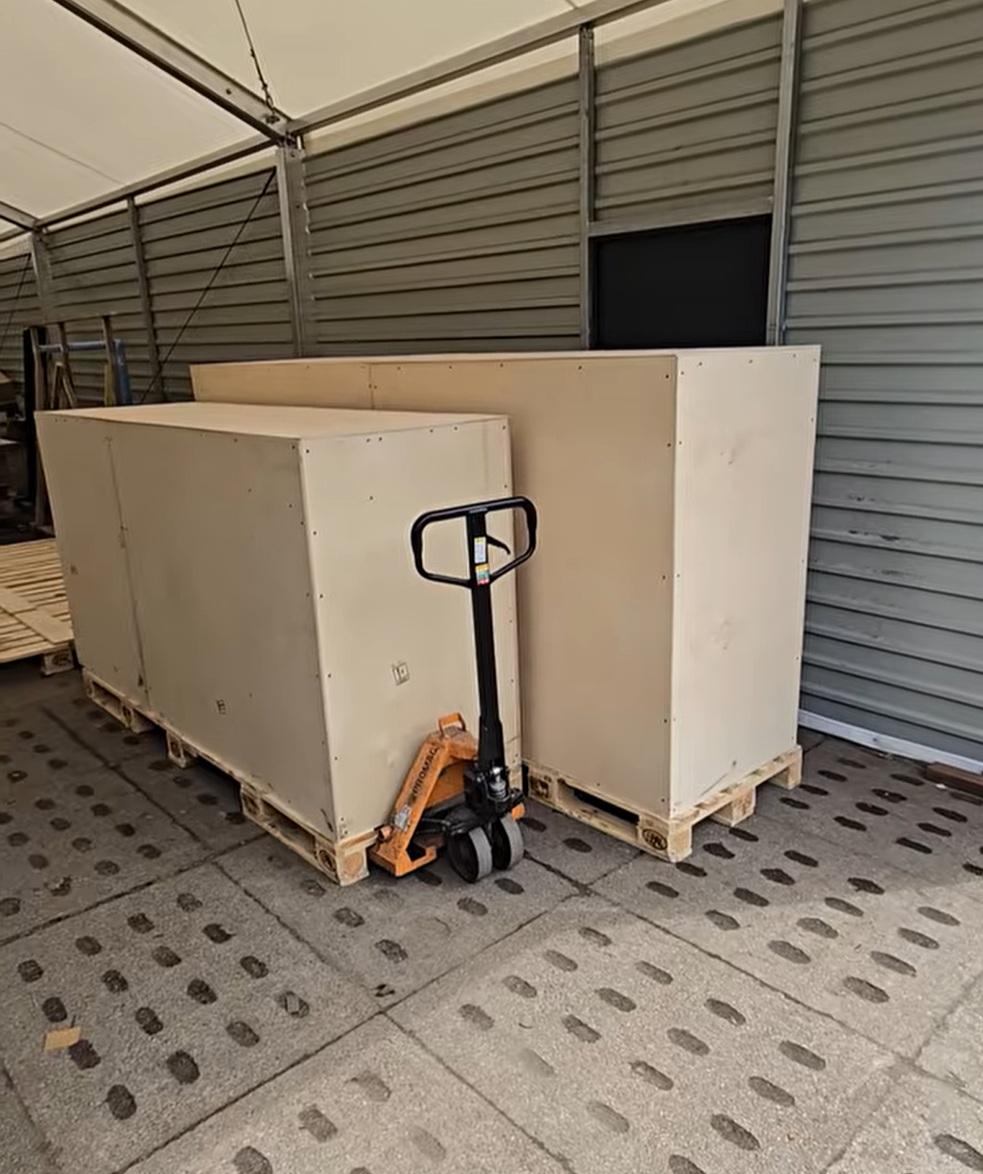
Fire Units Shipping Out to the USA for Testing | PORTAMET
What does it take for a steel-framed door or screen to be trusted when the stakes are high? Fire performance is one of the most scrutinised requirements in modern architecture, and for good reason: it protects lives, supports safe evacuation, and helps contain damage when the unexpected happens.
As a premium Polish manufacturer based in Gdańsk, Portamet produces bespoke steel doors, steel windows, partitions, and screens for projects across Europe, the UK, and the USA. When fire-rated units ship to the United States for testing, the process is not simply a box-ticking exercise. It is a practical demonstration of how design intent, craftsmanship, and verified performance come together in real-world construction.
Why fire testing matters in today’s building projects
Fire safety requirements are no longer limited to high-rise towers and public buildings. Contemporary homes, hospitality spaces, and workplaces increasingly include open-plan layouts, internal glazing, and large-format doors that need to meet both aesthetic and regulatory demands.
In these settings, fire-rated assemblies help create safer compartments while maintaining visual openness. Steel is particularly well-suited to this role: it is strong, stable, and capable of supporting slim-frame glazing solutions that deliver light and architectural clarity without bulky profiles.
Performance needs to be proven, not assumed
It is not enough for a product to “look solid” or to be built from inherently robust materials. Fire performance is validated through recognised test methods that simulate exposure to high temperatures and pressure changes. Only proven results give specifiers confidence that a door, partition, or screen will behave predictably in an emergency.
For architects and developers working internationally, verified testing is also a common prerequisite for approvals, insurance requirements, and project sign-off. This is especially relevant when supplying to different markets, such as the UK, EU countries, and the United States.
What “fire-rated” means for steel doors and glazed steel partitions
The term “fire-rated” is often used broadly, but it refers to specific performance outcomes achieved by a complete assembly. In steel-framed glazing, that assembly can include the frame, glazing, beads, intumescent seals, hardware, and installation method. Each component plays a role.
In many projects, fire performance must be balanced with other requirements such as acoustic control, durability, security, and thermal efficiency. For external applications, thermal performance becomes even more important, pushing manufacturers to engineer profiles and glazing specifications that reduce heat transfer while maintaining slim sightlines.
Integrity, insulation, and smoke control
Fire testing commonly assesses how long an assembly can maintain integrity (preventing flames and hot gases from passing through) and, in some cases, insulation (limiting heat transfer to the non-fire side). Some specifications also consider smoke leakage, particularly in corridors and escape routes.
For design teams, the practical takeaway is simple: the visual style of a Crittall-style steel door or slim-frame glazing system must be matched with a tested configuration if it is intended for fire-rated zones.
Why ship fire units to the USA for testing?
Shipping test units to the USA reflects the reality of modern construction: projects, design teams, and supply chains are increasingly international. When American architects and builders specify bespoke steel frames, they often need performance evidence aligned with the expectations of their market and stakeholders.
For Portamet, exporting to the USA is an extension of established international delivery to Europe and the UK. Sending fire units for testing supports a clear goal: ensuring steel doors and glazed screens can be specified with confidence where documentation and verified performance are essential.
Supporting cross-border specification
Architects working on hospitality, residential, and commercial projects frequently source specialist elements from European manufacturers to achieve a particular quality level and design precision. Slim steel profiles, crisp glazing bars, and careful detailing are often easier to achieve with experienced bespoke fabrication.
However, international specification requires more than beautiful shop drawings. It also relies on credible performance pathways that help design teams coordinate with code consultants, contractors, and approving authorities.
From workshop to test lab: what a fire testing journey involves
Fire testing begins long before a unit is crated for export. It starts with design intent, engineering decisions, and consistent fabrication practices. Every detail—sightlines, glazing thickness, reinforcement, seal placement, and hardware prep—affects final performance.
Portamet’s approach to bespoke steel frames is rooted in controlled production and repeatable quality. Even when every project is custom-made, the underlying manufacturing discipline ensures that tested configurations can translate into real project deliverables.
Step 1: Defining the tested configuration
A fire test is conducted on a specific build-up. That build-up includes the steel frame profile and thickness, the exact glazing type, the beads and fixings, the seals, and the hardware preparation. Small substitutions can change performance, which is why design teams should treat a tested configuration as a coordinated package.
In practice, this means aligning early on: is the requirement focused on a door leaf, a fixed screen, a door-and-sidelight combination, or a larger partition system with multiple modules? Each scenario influences the scope of testing.
Step 2: Fabrication with testing in mind
Fire-rated steel doors and partitions demand careful fabrication. Weld quality, squareness, tolerances, and consistent clearances matter. Glazing rebates and bead details must allow the correct seating of fire-rated glass and the activation of intumescent materials under heat.
In slim-frame glazing, precision is especially important because there is less “visual forgiveness.” The goal is to maintain refined sightlines while ensuring the construction is robust enough for demanding performance criteria.
Step 3: Packing and international logistics
Shipping a large, heavy steel assembly safely requires more than standard packaging. Crates must protect edges, glazing zones, and critical tolerances. Test units often travel with documentation that identifies components and assembly methods to support correct lab setup.
For projects in the USA, logistics can involve transatlantic freight planning, lead time coordination, and careful handling to ensure the unit arrives in the same condition it left the factory floor in Gdańsk.
Step 4: Lab installation and controlled testing
In the test lab, the unit is installed into a test rig that simulates real-world conditions. The assembly is then exposed to a controlled fire curve while technicians monitor behaviour: deformation, seal response, glazing performance, and the passage of flame or hot gases.
Even for seasoned manufacturers, lab testing is a revealing process. It validates assumptions, highlights the importance of specific details, and provides a pathway for refining engineering decisions where necessary.
Design meets compliance: keeping slim sightlines without compromise
One of the most common misconceptions is that fire-rated systems must look heavy. While it is true that fire performance can require additional elements—specialist glazing, seals, reinforcement, and hardware—thoughtful steel engineering can preserve a minimalist appearance.
Steel is uniquely positioned to deliver this balance. Its strength allows narrower profiles compared with many alternatives, supporting the Crittall-style aesthetic and other slim-frame glazing trends while meeting demanding functional requirements.
Where fire-rated steel glazing makes sense
Fire-rated steel doors and screens are often used in locations where visibility and light are valued, but compartmentation is required. Examples include corridors connecting open-plan office zones, stairwell lobbies, shared residential areas, and hospitality layouts where design coherence is important.
In high-end homes, internal steel partitions can create separation between kitchen zones and circulation routes without losing the open, airy feel that architects and homeowners want.
Key components that influence fire performance in steel-framed systems
Fire rating is never achieved by “steel alone.” It is the result of a complete system working together under extreme conditions. For specifiers, understanding the role of each component helps avoid late-stage design changes and supports smoother procurement.
Fire-rated glass selection
Fire-rated glass is a specialised product category with multiple performance types. The selection depends on whether the requirement is integrity only or integrity plus insulation. The chosen glass must be compatible with the frame design, edge coverage, bead detail, and seal system.
In slim-frame glazing, edge detailing is particularly critical. The way glass is retained and protected at the perimeter can influence behaviour under heat and pressure.
Intumescent seals and liners
Intumescent materials expand under heat, helping to seal gaps and slow the passage of flames and hot gases. Their placement, continuity, and compatibility with the frame are essential.
In bespoke steel frames, this is where manufacturer experience becomes valuable: the visual design must accommodate these components without disrupting slim sightlines or creating awkward junctions at corners and meeting stiles.
Hardware and self-closing strategy
For fire-rated steel doors, hardware selection is not simply a styling choice. Hinges, latches, panic hardware (where required), and closers must be suitable for the door’s mass and test configuration. Door behaviour during a fire event depends on correct closing and latching.
Planning hardware early also supports cleaner detailing—an important consideration for design-conscious clients who choose steel doors for their refined appearance.
Installation method and substrate interface
A well-made door can still fail to perform if installed incorrectly. Fire performance is linked to how the frame interfaces with the wall, what anchors and gaps are used, and how perimeter sealing is executed.
This is why tested systems often come with clear installation guidance. For international projects, alignment between the manufacturer, contractor, and local code consultant reduces risk during site works.
Steel vs aluminium for fire-rated slim-frame glazing
Aluminium systems are common in external glazing, but when it comes to slim-frame, Crittall-style internal partitions and doors, steel remains the benchmark for many designers. Its structural capacity supports slender profiles and crisp lines, which are central to the industrial-modern aesthetic.
In fire-rated contexts, material behaviour under heat becomes a key consideration. Steel’s strength and stability can be advantageous in maintaining frame integrity, particularly in narrow sections. Ultimately, specification should be guided by tested performance, detailing requirements, and the overall design intent.
Thermal performance still matters—especially for external steel doors and windows
Fire-rated discussions often focus on internal doors and screens, but broader building performance priorities remain. In many regions, including parts of Europe, the UK, and North America, energy efficiency and comfort expectations continue to rise.
Portamet’s expertise in steel windows and external steel doors includes attention to thermal efficiency, enabling architects to pursue slim-frame glazing without sacrificing performance. Where projects demand both refined aesthetics and dependable comfort, thermally considered steel systems provide a compelling route.
What architects and developers gain from tested, bespoke steel frames
Custom-made production is not just about creating a unique look. It can also be a practical advantage on complex projects, where openings are non-standard, alignment is critical, and the steelwork needs to integrate with interior finishes and building tolerances.
With bespoke steel frames, dimensions, glazing bar layouts, handle positions, and junction details can be coordinated to suit the architecture. When this is paired with validated performance testing, the result is a more confident specification pathway—especially for premium residential, hospitality, and commercial developments.
Consistency across multi-site or phased projects
Developers and contractors often need consistent visual language across multiple units, floors, or locations. Slim steel profiles help create that signature look, while bespoke manufacturing ensures repeatable detailing even when openings vary.
For projects spanning different markets—such as a brand concept rolling out in the UK, Europe, and the USA—having a manufacturer experienced in international delivery supports continuity of design.
Common specification pitfalls to avoid with fire-rated steel doors and screens
Fire-rated steel glazing can be straightforward when planned properly, but problems typically arise when key decisions are left too late or when tested configurations are not respected. A few common pitfalls are worth flagging early in the design process.
Changing components after testing assumptions
Switching glazing type, altering beads, or substituting seals can affect performance. Even changes that seem minor from a design perspective may require re-evaluation. Aligning on the tested build-up early helps avoid delays and rework during procurement.
Underestimating door weight and hardware needs
Steel doors—especially when fire-rated—can be heavier than standard internal doors. Hardware must be selected accordingly, and structural support in surrounding walls should be considered. Coordinating with the contractor early helps prevent site modifications later.
Overlooking installation responsibilities
Installation quality is part of performance reality. Clear installation guidance, proper site supervision, and attention to tolerances are crucial. Where projects involve multiple trades, defining responsibilities for perimeter sealing and finishing prevents gaps in scope.
How this testing milestone connects to Portamet’s wider work
Shipping fire units to the USA for testing sits within a broader commitment to delivering refined steel-framed solutions for international clients. Portamet manufactures high-quality bespoke steel doors and steel windows with slim profiles, engineered detailing, and a focus on durability and performance.
From Gdańsk, Poland, Portamet supplies projects across Europe and the UK, as well as clients in the USA who are looking for European craftsmanship and Crittall-style aesthetics without compromising on build quality. Whether the requirement is an internal steel partition, a statement steel door, or thermally efficient external steel windows, the emphasis remains the same: precision, reliability, and design clarity.
Planning a project with fire-rated steel frames: practical next steps
Fire-rated elements are easiest to integrate when considered early—at concept design or schematic stage—rather than being treated as a late compliance add-on. Early coordination also makes it simpler to maintain slim sightlines and consistent detailing across a project.
Questions worth resolving early
- Which locations truly require fire rating, and what duration is expected?
- Is the requirement integrity only, or integrity plus insulation?
- Is the assembly a single door, a door-and-sidelight, or a multi-module glazed partition?
- What hardware strategy suits the use case and the look?
- How will installation be coordinated on site, and what wall build-ups are involved?
Clear answers to these points help manufacturers and design teams align on the most appropriate configuration and avoid unnecessary compromises.
Closing thought
Fire testing is one of the most meaningful checkpoints in the lifecycle of a steel-framed system. It turns design ambition into documented performance and supports safer, more resilient buildings—without giving up the elegance that slim-frame glazing can bring.
Portamet continues to develop and manufacture bespoke steel doors, steel windows, partitions, and screens for clients across Europe, the UK, and the USA, pairing European craftsmanship with the practical demands of modern construction. For upcoming projects requiring slim steel profiles, Crittall-style detailing, and dependable performance, exploring Portamet’s steel-framed systems or requesting a tailored quote provides a clear next step.