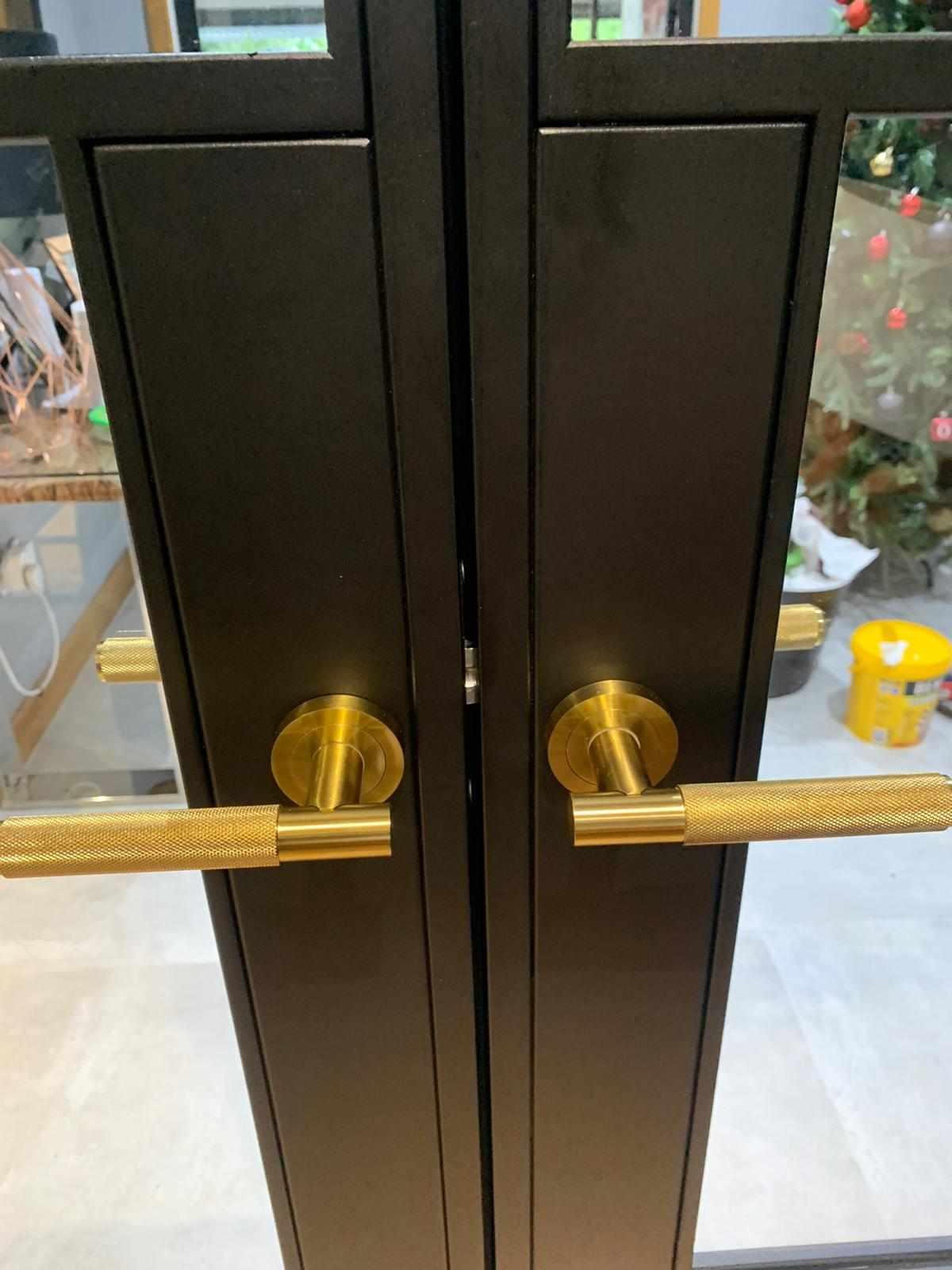
Fire-Rated Steel Doors with Brass vs Black Handles: Choosing the Right Finish for Safety and Style
Handle finish often decides whether a fire-rated steel door feels like a purely functional barrier or a fully integrated design feature. Brass brings warmth and heritage; black brings contrast and modern clarity. Both can work beautifully on slim steel profiles—provided the choice supports the project’s architectural language, durability requirements, and fire-door specification.
Fire-rated steel doors increasingly appear in high-end homes, hospitality, offices, and mixed-use developments, where compartmentation and escape routes require certified performance without sacrificing aesthetics. Portamet, a premium Polish manufacturer based in Gdańsk, produces bespoke steel doors and windows with slim sightlines and strong thermal performance, supplied to projects across Europe, the UK, and the USA—making design-led fire-rated solutions a practical option rather than a compromise.
Why Handle Finish Matters on Fire-Rated Steel Doors
Fire-rated doors carry a unique visual weight. Frames tend to be more substantial than non-rated internal doors, seals become part of the assembly, and closer hardware may be required. In that context, the handle becomes the most “human” touchpoint—literally and visually—so its finish can balance the door’s technical character.
Beyond appearance, handle finish affects long-term maintenance and perceived quality. In busy commercial interiors, fingerprints, scratches, cleaning chemicals, and UV exposure can quickly shift a finish from “premium” to “tired.” On residential projects, handle finish can either elevate a Crittall-style composition or clash with surrounding metals such as lighting, faucets, cabinetry pulls, and window furniture.
Fire-Rated Steel Doors: Aesthetic Freedom Within a Certified System
Fire rating is never just a label on a leaf. Certified performance depends on the complete assembly: door leaf construction, frame, glazing type (if present), seals, intumescent materials, ironmongery, installation tolerances, and in some cases closer and latch requirements. Handle selection therefore sits inside a broader compliance framework.
Within that framework, significant design freedom remains possible. Slim-frame glazing, refined sightlines, and bespoke steel frames can still align with contemporary minimalism or classic industrial detailing. The key is early coordination: handle design, spindle type, latch case, escutcheon/rose format, and finish selection should be agreed during specification—before fabrication and certification constraints lock in choices.
Typical Fire-Rating Targets (Project-Dependent)
- 30-minute fire resistance (often referenced as EI30 / FD30), commonly used for internal compartmentation.
- 60-minute fire resistance (EI60 / FD60), frequently used where higher protection is required.
Local codes and test standards vary by country and application. Fire doors should always be specified and installed according to the relevant national requirements, including permitted hardware and glazing configurations.
Brass Handles on Fire-Rated Steel Doors: Warmth, Heritage, and High-End Detail
Brass brings immediate warmth to steel. Against a dark frame, brass reads as jewellery—an accent that softens industrial geometry and introduces a sense of craft. On lighter frames (white, ivory, soft greys), brass can feel quietly luxurious, leaning into boutique-hotel elegance rather than factory minimalism.
When Brass Works Best
- Heritage-inspired renovations where steel doors echo traditional joinery proportions but deliver modern performance.
- Warm material palettes featuring timber floors, walnut cabinetry, travertine, limestone, clay plaster, or brass lighting.
- Statement entrances and lobby doors where a premium touchpoint supports a high-end first impression.
- Soft industrial interiors combining Crittall-style grids with warm neutrals and textured finishes.
Brass Finish Options (Not All “Brass” Looks the Same)
Brass handles appear in multiple finish families, each changing the overall character:
- Polished brass: bright, reflective, formal; best as a deliberate statement in controlled lighting.
- Satin / brushed brass: softer sheen; often the easiest to integrate in modern interiors.
- Antique brass: darker, aged tone; pairs well with classic detailing and patinated materials.
- Unlacquered brass: develops a living patina; visually rich, but requires acceptance of natural change.
Key Advantages of Brass
- Visual warmth that counterbalances steel’s crisp geometry.
- Premium association in hospitality, high-end residential, and luxury retail.
- Compatibility with warm metals used in lighting and bathroom/kitchen fixtures.
Potential Challenges with Brass
- Patina and inconsistency: unlacquered brass changes over time; even lacquered finishes can age unevenly with heavy use.
- Cleaning sensitivity: harsh chemicals can dull or damage certain brass finishes.
- Style dominance: brass can become the focal point; on minimalist schemes, that may feel distracting.
For projects seeking a “designed” feel rather than purely utilitarian fire doors, brass often provides the quickest route to a refined result—especially when matched with carefully selected hinges, closers, and glazing bars.
Black Handles on Fire-Rated Steel Doors: Modern Contrast and Architectural Consistency
Black hardware can make a fire-rated steel door feel intentional and coherent, particularly when frames are also black or dark bronze. The result is architectural: lines look cleaner, grids read sharper, and the door becomes part of the building’s graphic language rather than an add-on.
When Black Works Best
- Minimalist interiors where visual noise should be reduced and outlines kept crisp.
- Monochrome palettes (black, white, grey) where consistency matters more than contrast.
- Commercial and workplace settings where durability and maintenance predictability take priority.
- Contemporary renovations that use slim-frame glazing to open spaces while keeping structure defined.
Black Finish Options
“Black” can range from soft matte to deep satin, and the difference is noticeable on touchpoints:
- Matte black: modern, understated; hides some fingerprints but can show scratches if coating is thin.
- Satin black: slightly more reflective; can look “cleaner” in bright spaces.
- Blackened / darkened metal effects: more character; pairs well with natural stone and timber.
Key Advantages of Black
- Design consistency with black steel frames and Crittall-style partitions.
- Strong architectural reading of lines and geometry, especially with slim profiles.
- Practicality in many settings, with predictable ageing when high-quality finishes are specified.
Potential Challenges with Black
- Scratch visibility: chips and wear can expose lighter substrate tones if the coating system is not robust.
- Fingerprint contrast: depending on sheen level, oils can show under certain lighting.
- Flatness risk: without texture layering (timber, textiles, warm metals), black can feel severe.
Black handles excel when the goal is quiet performance—keeping attention on spatial composition, glazing proportions, and the rhythm of steel lines.
Brass vs Black: A Practical Decision Framework
Handle preference often becomes clearer through a structured comparison. The following criteria help align finish choice with the project brief and the realities of fire-rated assemblies.
1) Overall Interior Temperature: Warm vs Cool
- Warm palettes (oak, walnut, beige stone, clay, warm whites): brass usually integrates naturally.
- Cool palettes (concrete, cool greys, crisp whites, stainless accents): black often looks more coherent.
2) Desired Focal Point: Accent vs Discretion
- Accent and character: brass reads as a deliberate feature on the door.
- Discretion and uniformity: black tends to recede, allowing glazing and proportions to lead.
3) Building Type and Wear Level
- High-traffic public areas: black can be easier to standardise, replace, and maintain across multiple doors.
- Signature spaces (primary entrance, penthouse lounge, boutique suite): brass can justify extra care due to its visual impact.
4) Matching Other Metals
Interiors often include several metal tones: lighting, taps, shower frames, cabinet pulls, and socket plates. Handle choice should avoid introducing a “third metal” without a plan.
- Brass present elsewhere: repeating brass on the door creates continuity.
- Black details dominant: black handles keep the metal story consistent.
5) Lighting Conditions
- Bright daylight: polished brass can produce strong highlights; matte black stays calm.
- Warm artificial lighting: satin brass can glow; black becomes more graphic and defined.
Fire-Rated Doors with Glazing: How Handle Finish Interacts with Sightlines
Steel doors with glass—especially slim-frame glazing—behave like framed views. Mullions, transoms, and glazing bars create rhythm; handle finish then acts as an punctuation mark on the composition.
- Brass + clear glass: creates a “gallery-like” detail, particularly on dark frames.
- Black + clear glass: maximises the grid effect; ideal for industrial and minimalist interiors.
- Brass + reeded/fluted glass: balances texture and warmth; reduces the starkness of steel.
- Black + reeded/fluted glass: strong contemporary look; excellent for privacy screens and partitions.
For multi-door elevations (for example, double doors with side screens), black handles keep attention on proportion and symmetry. Brass handles draw attention to the leaf edge and operable element—useful when the intent is to highlight craftsmanship and entry points.
Compliance Considerations: Keeping Design Aligned with Fire Performance
Handle choice on a fire-rated steel door should never be treated as purely decorative. Fire door certification typically restricts compatible hardware types and installation methods, especially for assemblies with glazing.
Key Specification Points to Confirm
- Certified compatibility of handle set, latch/lock case, and any additional hardware within the tested door configuration.
- Escutcheon vs rose: some designs require specific fixing patterns that must match the leaf construction.
- Lever length and usability: accessibility and building regulations may influence lever dimensions and operation.
- Closer and latch requirements: the “feel” of the handle in use depends on door control hardware.
Early coordination avoids late-stage substitutions that can undermine the intended aesthetic or complicate certification alignment.
Durability and Maintenance: What Ages Better, Brass or Black?
Ageing can be a feature or a flaw depending on the brief. The best outcome comes from selecting a finish that aligns with the desired lifecycle appearance.
Brass Ageing
- Lacquered brass aims to preserve a consistent look, but can wear at touchpoints over time.
- Unlacquered brass develops patina, creating an intentionally lived-in look—often attractive in heritage and hospitality settings.
Black Finish Ageing
- Quality of coating determines longevity; robust finishes resist chipping and fading.
- Touchpoint wear can reveal sheen changes, especially on matte finishes.
Maintenance strategy matters as much as finish choice. In hotels and offices, cleaning protocols should be aligned with the selected finish to prevent dulling or uneven wear.
Design Pairings That Work: Frame Colour, Handle Finish, and Interior Style
Black Steel Frame + Brass Handle
A classic high-contrast pairing. Black frames deliver structure; brass adds warmth and a luxury touch. This combination suits statement doors, reception areas, and premium residential entrances—especially when echoed in lighting or furniture details.
Black Steel Frame + Black Handle
The most architecturally “quiet” option. Great for consistent elevations across partitions and screens, and ideal where the steel grid should read as a single continuous element.
White or Light Frame + Brass Handle
Softer and more boutique. Works beautifully in Scandinavian-inspired interiors and calm, warm minimalism, where brass becomes a subtle highlight rather than a bold contrast.
White or Light Frame + Black Handle
Crisp and graphic. Best for modern interiors with strong black accents elsewhere (stair balustrades, window frames, lighting tracks), creating deliberate punctuation against light surfaces.
Common Specification Mistakes (and How to Avoid Them)
Mixing Too Many Metal Finishes
Multiple competing metals can make even premium steel doors feel visually busy. A simple approach usually works best: one dominant metal, one supporting metal, and limited exceptions.
Choosing a Finish Without Considering Usage
Fire-rated doors in corridors, stairwells, or shared amenities receive frequent contact. Finish durability should be treated as a performance choice, not only a visual one.
Late Handle Selection
Last-minute handle decisions can force compromises in proportions, fixing types, or certified compatibility. Better results typically come from selecting the handle and lockset concept early, alongside sightline and glazing decisions.
So, Which Handle Finish Fits Better: Brass or Black?
Brass tends to suit projects seeking warmth, tactility, and a premium accent—especially where steel doors should feel crafted and welcoming rather than strictly industrial. Black tends to suit projects prioritising architectural consistency, minimalism, and a clean graphic look across multiple openings.
On fire-rated steel doors, both finishes can look exceptional when the overall system is well resolved: slim steel profiles, carefully proportioned glazing, and hardware selected for both compliance and longevity.
Bespoke Fire-Rated Steel Doors with Portamet: Design-Led Performance
High-performing doors no longer need to look purely utilitarian. Portamet manufactures bespoke steel doors and windows in Gdańsk, Poland, combining European craftsmanship with slim sightlines and strong thermal performance. Custom production enables coordination of proportions, glazing patterns, and hardware intent across doors, partitions, and screens—supporting cohesive design across residential and commercial projects.
International projects often require reliable logistics and clear technical coordination. Portamet supplies steel doors and windows for clients across Europe, the UK, and the USA, helping architects, designers, developers, and homeowners achieve Crittall-style elegance and slim-frame glazing aesthetics within robust steel-framed systems.
Next Step: Align Handle Finish with the Full Door Concept
For a fire-rated steel door specification, handle finish works best when selected alongside frame colour, glazing style, and the wider hardware set. Brass and black can both deliver a standout result—provided the choice supports the project’s material palette, wear expectations, and compliance pathway.
Portamet steel doors and windows offer a route to bespoke steel frames with refined sightlines, strong durability, and international delivery. Enquiries, technical discussions, and quotation requests can help clarify the best handle direction—brass warmth or black clarity—within a complete, design-led steel door solution.